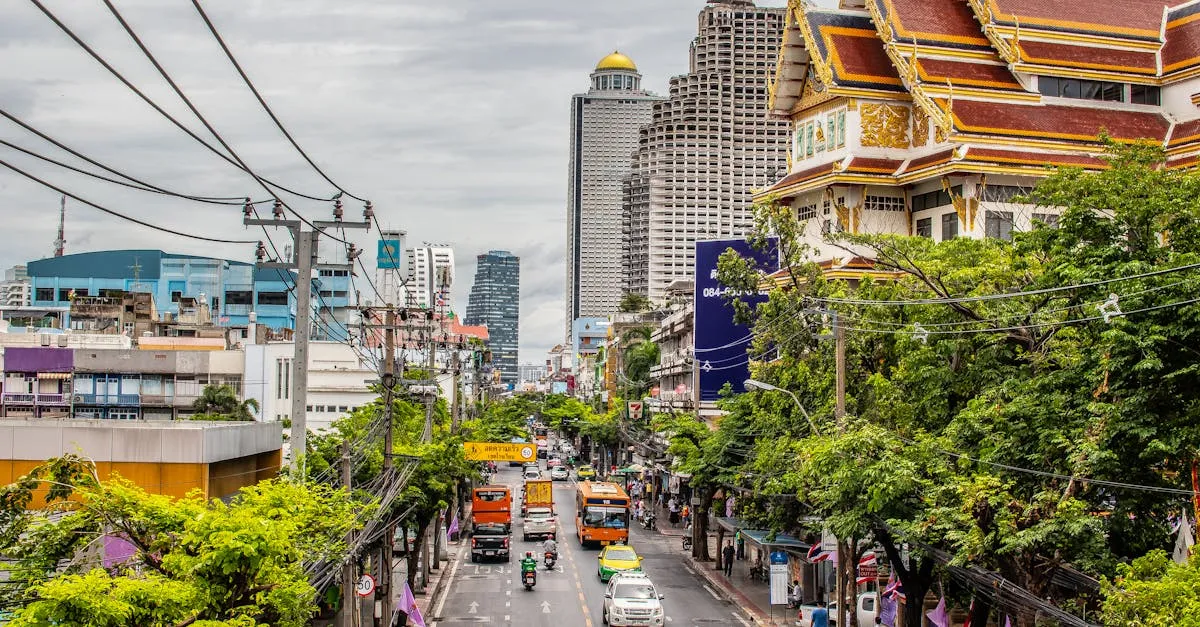
Photo by Wilfried Strang on Pexels
Border Runs Are Dead: Southeast Asia's 2026 Visa Crackdown
Thailand now caps visa-exempt land entries at 2 per year, and the region is following. Why border runs no longer work in 2026 and which visas to use instead.
If your plan for living in Thailand was to fly in on a visa exemption, stay a month, hop across the border, and come straight back for another free stamp, that plan stopped working in 2026. The border run, the cheapest trick for turning a tourist entry into an open-ended stay, is now closed off for anyone trying to use it long term.
This is not a scare headline. Thailand wrote the limit directly into its border rules, and the rest of Southeast Asia is moving the same way. Here is exactly what changed, what still works, and the legal routes that now make more sense than chasing stamps.

Key Takeaways
- Thailand caps visa-exempt land entries at 2 per calendar year at the Cambodia, Laos, Myanmar, and Malaysia borders (ThaiEmbassy.com, 2026)
- Visitors arriving by air still get a 30-day visa-exempt stamp up to 6 times per year, but repeat patterns get flagged (Thai Law Online, 2026)
- Visa-exemption extensions are limited to 2 per year: 30 days, then a second extension of 7 days (Thai Law Online, 2026)
- A third land crossing or an obvious “living here” pattern can mean denied entry or a ban (Siam Legal, 2025)
- The fix is a proper long-stay visa: Thailand’s DTV gives 180 days per entry over a 5-year validity (ThaiEmbassy.com, 2026)
What was a border run, and why did it work?
For years the border run was an open secret among long-stay travelers in Southeast Asia. You would arrive in Thailand visa-free, get a 30-day stamp at the airport, and live cheaply in Chiang Mai or on a southern island. When the clock ran low, you took a cheap bus or flight to the Cambodian or Malaysian border, walked across, turned around, and walked back in for a fresh stamp. No visa, no paperwork, no fees beyond the transport.
It worked because immigration treated each entry as a new tourist arrival. Stack enough of them together and a 30-day tourist allowance quietly became a year of living abroad. Digital nomads built whole lifestyles on it, and a small industry of “visa run” minibus services grew up around the border towns to make it painless.
The catch was always that none of this was the intended use. A tourist stamp is for tourism, not for working remotely or settling in. Thailand tolerated the gap for a long time. In 2026 it stopped.
What killed it: Thailand’s 2026 land-border cap
The decisive change is a hard numeric limit. Travelers entering Thailand under the visa exemption by land at the Cambodia, Laos, Myanmar, and Malaysia borders now receive a 30-day stamp a maximum of two times per calendar year, counted from 1 January to 31 December (ThaiEmbassy.com, 2026).
That single rule guts the border run. The whole point was unlimited resets. Two per year is a holiday allowance, not a residence strategy.
Thai Immigration has been explicit about why. The bureau says the rule exists to push foreigners toward securing the correct visa in advance from a Royal Thai embassy, rather than living in the country on repeated tourist stamps (Thai Law Online, 2026). Officers can now deny entry to anyone using visa-exempt crossings more than twice without a justifiable reason (Siam Legal, 2025).
This sits on top of the bigger 2026 change: Thailand cut the standard visa-free stay from 60 days back to 30. We covered that in full in our Thailand 30-day visa-free rules breakdown, and it is worth reading alongside this, because a shorter stay plus a capped reset is what makes the old loop unworkable.
Can you still do a border run by air?
The cap is not identical everywhere, and the difference is worth understanding before you book anything.
Arrive by air without a prior visa and you still receive the 30-day visa-exempt stamp up to six times per calendar year (Thai Law Online, 2026). So a frequent flyer pattern has more runway than a land-hopping one. But “more runway” is not the same as safe. Immigration tracks entry history, and two or more visa-exempt entries inside twelve months is already a pattern that can trigger extra questioning or refusal at the desk.
Extensions tightened too. You can extend a visa-exempt stay at a Thai immigration office, but only twice in a calendar year: a first extension of 30 days, then a second of just 7 (Thai Law Online, 2026). The era of stretching a tourist entry into a quasi-residence, one extension at a time, is over.
The honest summary: short, genuine trips are fine. A back-to-back loop designed to dodge a real visa is what the system now catches.
Are other Southeast Asian countries cracking down too?
Thailand is the clearest case, not a lone one. Vietnam, Malaysia, Indonesia, Cambodia, and the Philippines are all part of a broader regional push against visa fraud and illegal long stays, tightening enforcement and rolling out digital pre-arrival systems through 2026 (Travel And Tour World, 2026).
The details differ by country and some changes are still proposals rather than law, so do not assume one country’s rule applies next door. Vietnam, for example, still offers 45-day visa-free entry for many nationalities through August 2028, which we cover in the Vietnam travel guide. The direction of travel across the region, though, is consistent: fewer free resets, more digital tracking, and a clear preference for travelers who hold the right visa before they fly.
What happens if you get caught?
Getting turned away is not a slap on the wrist. A refused entry at a land border means a wasted trip and, often, a same-day scramble to leave again. A refused boarding means a forfeited flight. Repeated visa-exempt entries flagged as “living and working on a tourist stamp” can escalate to a denial of entry or, for clear abuse, a ban (Siam Legal, 2025).
The math has flipped. The border run used to be the cheap option. Now the risk of a denied entry, a non-refundable flight, and a black mark on your record costs far more than a proper visa would have.

What should you do instead of border runs?
The good news is that the legal routes are genuinely better than the loop they replace, especially for remote workers. You stop living trip to trip and get real stability.
Thailand’s Destination Thailand Visa (DTV)
The DTV is the obvious answer for nomads. It gives you 180 days per entry, stays valid for 5 years, and is multi-entry, so each time you arrive the 180-day clock resets. You can extend a stay once at immigration for another 180 days for 1,900 THB, which means close to a full year in the country without leaving (ThaiEmbassy.com, 2026).
The trade-offs are real but manageable. The government fee is about 10,000 THB (roughly $290), you must show proof of around 500,000 THB (about $14,500) in savings, and you have to apply from outside Thailand at a Royal Thai embassy or consulate (ThaiEmbassy.com, 2026). One important limit: the DTV is a special tourist visa, so it does not allow a Thai work permit or work for Thai companies and clients. Remote work for clients outside Thailand is the intended use.
For a side-by-side look at how the DTV compares with options in other countries, see our 2026 digital nomad visa guide.
Tourist and education visas
If a five-year commitment is more than you need, a standard Tourist Visa (TR) bought in advance gives you a longer, cleaner single stay than the visa exemption, and an Education Visa (ED) suits anyone genuinely studying Thai or Muay Thai. Both are documented in our complete Thailand visa guide for 2026, which walks through every class, extension, and overstay rule.
Regional nomad visas
Outside Thailand, the proper-visa route is also where the region is investing. Malaysia runs the DE Rantau Nomad Pass and Indonesia has its E33G remote worker visa, both built for exactly the people who used to rely on border hops. The digital nomad visa guide covers the current options and requirements.
Which route fits your stay?
| Your plan | Best route in 2026 |
|---|---|
| Up to 30 days, one trip | Visa exemption (arrive by air), no paperwork |
| 30 to 60 days | Enter visa-exempt, extend once at immigration (1,900 THB) |
| 2 to 6 months, remote work | DTV, or a pre-arranged Tourist Visa (TR) |
| Most of the year, recurring | DTV (180 + 180), valid 5 years |
| Working for a local employer | Non-B visa plus a work permit, not a tourist entry |
The rule of thumb is simple: if you want to be in Thailand for more than a normal holiday, get the visa that matches before you fly. If you are based in Chiang Mai or thinking about it, our Chiang Mai digital nomad guide covers cost of living, coworking, and the practical side of settling in legally.
Bottom line
The border run is finished as a way to live in Southeast Asia. Thailand’s two-entries-per-year land cap, the shorter 30-day stay, and tighter extensions remove the loophole, and the region’s wider crackdown means the same playbook will not simply work next door. Genuine short trips are unaffected. Long stays now need the right visa, and for most remote workers the DTV is a better deal than the endless stamp chase ever was.
Plan the proper trip, then book it.
Related reading:
- Thailand cuts visa-free stay to 30 days in 2026
- Thailand visa guide 2026: every class, extension, and overstay rule
- Digital nomad visa guide 2026
Ready to plan a stay that fits the new rules?
Sources
- ThaiEmbassy.com, “New Visa Rules for Border Entry to Thailand,” retrieved 2026-05-25, https://www.thaiembassy.com/thailand-visa/thailand-visa-latest-update
- Thai Law Online, “New Rules on Border Runs Limits in Thailand,” retrieved 2026-05-25, https://www.thailawonline.com/border-runs-limits-in-thailand/
- Siam Legal, “Thailand Visa Exemption: New Crackdown and Enforcement Rules,” retrieved 2026-05-25, https://siam-legal.com/travel-to-thailand/thailand-visa-exemption-new-crackdown-and-enforcement-rules-for-2025/
- ThaiEmbassy.com, “Destination Thailand Visa (DTV) 2026,” retrieved 2026-05-25, https://www.thaiembassy.com/thailand-visa/dtv-visa-thailand
- Travel And Tour World, “Thailand Joins Vietnam, Malaysia, Indonesia, Cambodia, Philippines in Push to Eradicate Visa Fraud and Illegal Stays,” retrieved 2026-05-25, https://www.travelandtourworld.com/news/article/thailand-joins-vietnam-malaysia-indonesia-cambodia-philippines-and-other-asian-countries-in-powerful-push-to-eradicate-visa-fraud-and-illegal-stays/
Affiliate disclosure: this post may contain affiliate links. If you book via our partners we earn a commission at no extra cost to you. Read the full disclosure.
Read next

Travelodge Sukhumvit 11 Bangkok - An Honest 4-Night Review
Four nights at Travelodge Sukhumvit 11, Bangkok for GBP 157 total - a clean, quiet high-rise room, a good gym, a tasty restaurant and staff who genuinely cared.
May 26, 2026
Thailand Cuts Visa-Free Stay to 30 Days in 2026: New Rules
Thailand's Cabinet ended 60-day visa-free stays on May 19, 2026. Now 54 nationalities get 30 days, only 4 keep Visa on Arrival. See the new rules.
May 22, 2026
Thailand Visa Guide 2026: Requirements, Tips & Tricks for Every Trave…
Everything you need to know about Thailand visas in 2026. Visa exemptions, Visa on Arrival, tourist visas, the new digital nomad visa, extensions, overstay pen…
Dec 27, 2025